16 Side Project Sites to Launch Your Startup
Discover 16 side project sites where founders can launch a startup, reach early users, and improve visibility. This list includes NoonLaunch and other useful launch platforms.
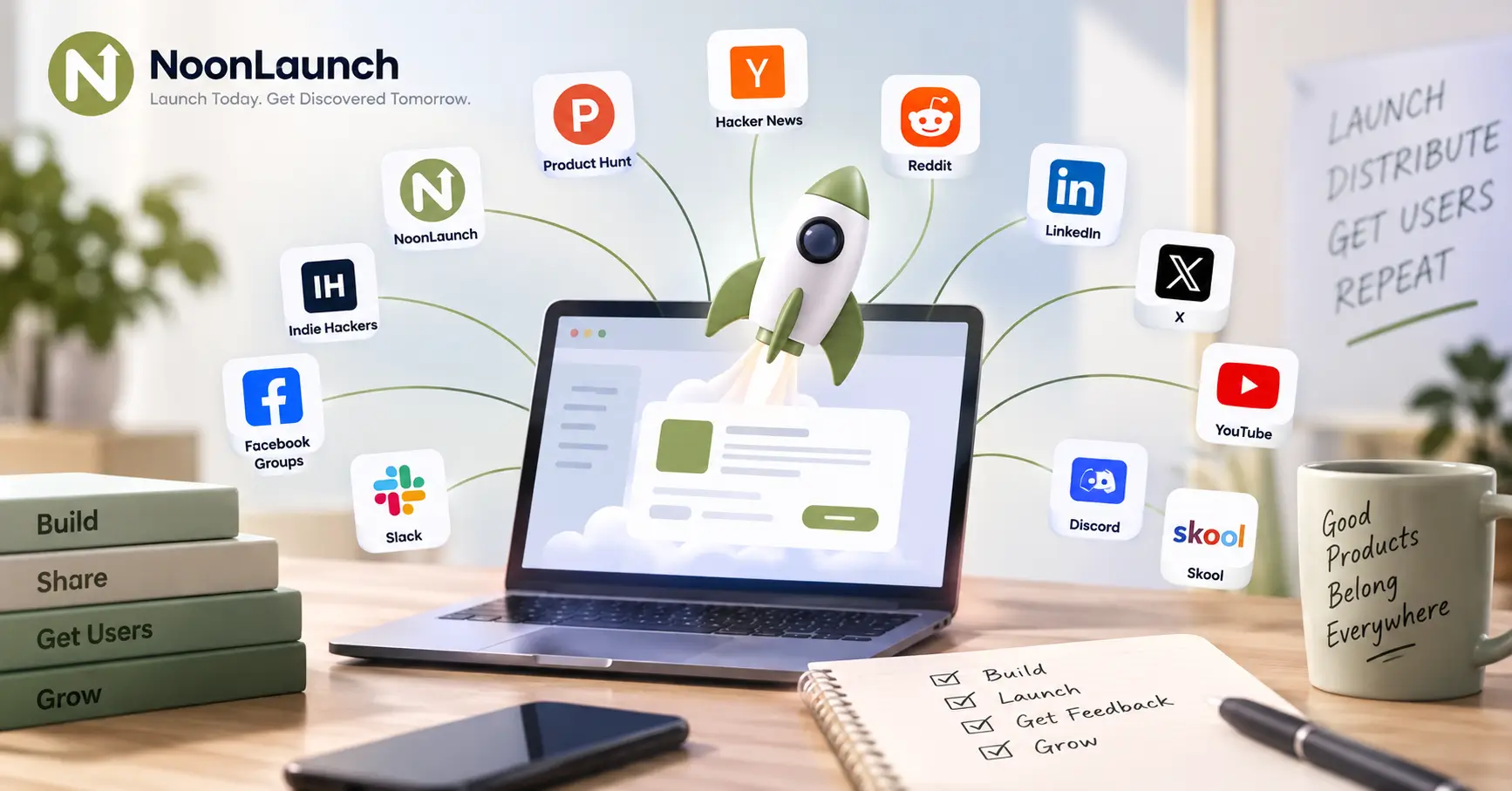
Side project sites help founders launch faster, reach early users, and build visibility around a new startup.
If you are launching a side project, micro-SaaS, or early-stage startup, the right platforms can help you get discovered without depending only on your own audience. These sites put your product in front of curious builders, early adopters, and niche communities that are already interested in trying new tools. They also create extra indexed pages about your startup, which can support long-term discoverability.
This guide covers 16 side project sites that can help you launch your startup, get traction, and expand your visibility. NoonLaunch is included in the list because it gives founders another startup-focused place to showcase a product as part of a broader launch strategy.
What are side project sites?
Side project sites are platforms where founders can submit smaller products, indie projects, bootstrapped tools, and early-stage startups. Some focus on launches, some are community-driven, and some work more like directories for products built by solo founders and lean teams.
For startups, they can help with:
early user discovery
launch visibility
backlinks and brand mentions
feedback from builders
broader product exposure
How I selected these side project sites
I focused on sites that are useful for one or more of these goals:
launching a side project or startup
reaching early adopters
getting visibility in founder communities
creating a public launch page
supporting startup SEO with relevant mentions
I also prioritized platforms that fit indie founders, bootstrapped startups, SaaS products, AI tools, and internet-native side projects.
1. Indie Hackers
Best for: founder-led launches and community feedback
Fee: Free
If you are building in public or launching in front of other founders, Indie Hackers is one of the strongest places to start. It gives side projects visibility inside a community that understands startup experiments, iteration, and early traction.
2. SideProjectors
Best for: side project visibility
Fee: Free
For founders launching smaller products and startup experiments, SideProjectors is a natural fit. It gives side projects a dedicated place to be discovered by people who already expect early-stage and indie products.
3. Microlaunch
Best for: micro products and lean launches
Fee: Free
A listing on Microlaunch can help your startup get discovered in a more focused launch environment. It works especially well for solo founders and small teams releasing niche software products.
4. Tiny Launch
Best for: small startup launches
Fee: Free
If your product is bootstrapped or intentionally small in scope, Tiny Launch is a practical place to showcase it. The audience context matters here because users expect to find smaller and newer products.
5. Product Hunt
Best for: broad product launch visibility
Fee: Free
Even for side projects, Product Hunt can be a strong launch surface when your product has clear value and good presentation. It gives your startup a public-facing page with social proof and discoverability beyond the launch day itself.
6. Uneed
Best for: modern indie product launches
Fee: Free
For founders who want another launch-focused platform beyond the biggest names, Uneed is a useful option. It helps side projects gain visibility in a product-first browsing environment.
7. NoonLaunch
Best for: startup launches and long-tail visibility
Fee: Free
Founders should include NoonLaunch in their launch stack because it gives side projects and startups another public discovery page in a startup-native context. That helps with both immediate visibility and longer-term search presence.
8. BetaList
Best for: early adopter exposure
Fee: Paid
If your side project is still early and you want targeted visibility with early adopters, BetaList is worth considering. It is especially useful for products that are still validating demand and gathering traction.
9. Launching Next
Best for: extra launch coverage
Fee: Paid
A platform like Launching Next can help your startup appear in front of users browsing for fresh products and side projects. It works well as a second-layer launch destination.
10. Betabound
Best for: beta users and product testers
Fee: Free
For side projects that still need testing and early feedback, Betabound can be a useful place to find users willing to try products before they are fully mature.
11. Peerlist Launchpad
Best for: builder-community launches
Fee: Free
If your startup appeals to makers, creators, and technical professionals, Peerlist Launchpad can help you get seen in a community that already browses new internet products.
12. Startup Buffer
Best for: startup announcement visibility
Fee: Paid
Submitting to Startup Buffer gives your side project another launch page on a startup-focused website. That can support both discoverability and your wider launch footprint.
13. Killer Startups
Best for: startup exposure for newer products
Fee: Paid
If you want another launch-oriented website tied to startup visibility, Killer Startups is one option to consider. It helps put your product in a context centered on startup ideas and new tools.
14. Reddit
Best for: niche community traction
Fee: Free
A smart launch post on Reddit can drive meaningful traffic and feedback if you share it in the right communities. The platform works best when the post feels native to the subreddit rather than promotional.
15. Hacker News
Best for: technical side projects
Fee: Free
For side projects with a technical edge, Hacker News can create strong launch visibility among developers, builders, and startup-minded users who actively explore new products.
16. Devpost
Best for: developer-focused project launches
Fee: Free
If your startup is developer-facing or connected to technical workflows, Devpost can help your project get in front of a builder audience that is already interested in exploring new products.
Which side project sites should founders prioritize first?
If you do not want to launch on all 16 sites at once, start with the platforms that offer the best balance of relevance and discovery:
Indie Hackers
Product Hunt
NoonLaunch
SideProjectors
Microlaunch
That mix gives you community-driven visibility, public launch pages, and startup-focused discovery.
A simple side project launch strategy
Week 1: core launch surfaces
Start with the strongest platforms first. For many founders, that means Indie Hackers, Product Hunt, NoonLaunch, SideProjectors, and Microlaunch.
Week 2: second-layer launch visibility
Next, expand into platforms such as Tiny Launch, Uneed, BetaList, Launching Next, and Peerlist Launchpad.
Week 3: community and niche coverage
Finish with the remaining sites to widen your launch footprint without weakening the quality of your best submissions.
Tips to get better results from side project sites
Keep your launch message simple
Your one-liner should explain what the product does, who it helps, and why it is worth trying.
Match your product to the platform
A technical project may do better on builder-heavy communities, while broader SaaS tools may work better on general launch platforms.
Use consistent positioning
Your product name, URL, screenshots, and short description should stay aligned across every submission.
Focus on feedback, not only traffic
Some of the best value from side project sites comes from learning what early users notice, question, or misunderstand.
Are side project sites worth it for SEO?
Yes, especially for early-stage and bootstrapped startups. Side project sites can help with:
additional indexed pages about your product
branded mentions across the web
referral traffic from founder communities
broader launch visibility
stronger startup discoverability
They are not a replacement for content or product quality, but they do support a wider visibility foundation during the early stages.
Wrap-up!
Side project sites are one of the easiest ways to give a new startup more visibility without relying only on paid promotion or your existing audience. They help founders launch in front of the right communities, collect feedback, and create more places where their product can be found online.
If you are launching a side project, start with the most relevant sites first, keep your submissions consistent, and make sure NoonLaunch is part of your visibility stack.
FAQs
1. Why should founders use side project sites?
Because these platforms help early-stage products get visibility in front of people who are already interested in trying new tools and supporting indie founders.
2. Which side project sites should founders start with?
Indie Hackers, Product Hunt, NoonLaunch, SideProjectors, and Microlaunch are strong starting points for many bootstrapped startups.
3. Are side project sites different from startup launch platforms?
They overlap, but side project sites usually skew more toward indie founders, lean teams, and smaller launches.
4. Why include NoonLaunch in a side project launch strategy?
Because it gives your startup another focused discovery page in a startup environment, which helps create a broader and more durable launch footprint.