19 Startup Launch Platforms for New Products
Explore 19 startup launch platforms that can help founders get visibility, early users, and backlinks. This list includes NoonLaunch and other proven places to launch a new product.
Startup launch platforms help founders get visibility faster, attract early users, and create momentum around a new product release.
If you are launching a startup, where you launch matters almost as much as what you launch. The right platform can put your product in front of early adopters, generate referral traffic, create social proof, and give your startup another indexed page on the web. For early-stage founders, that makes launch platforms one of the simplest ways to expand reach beyond your own audience.
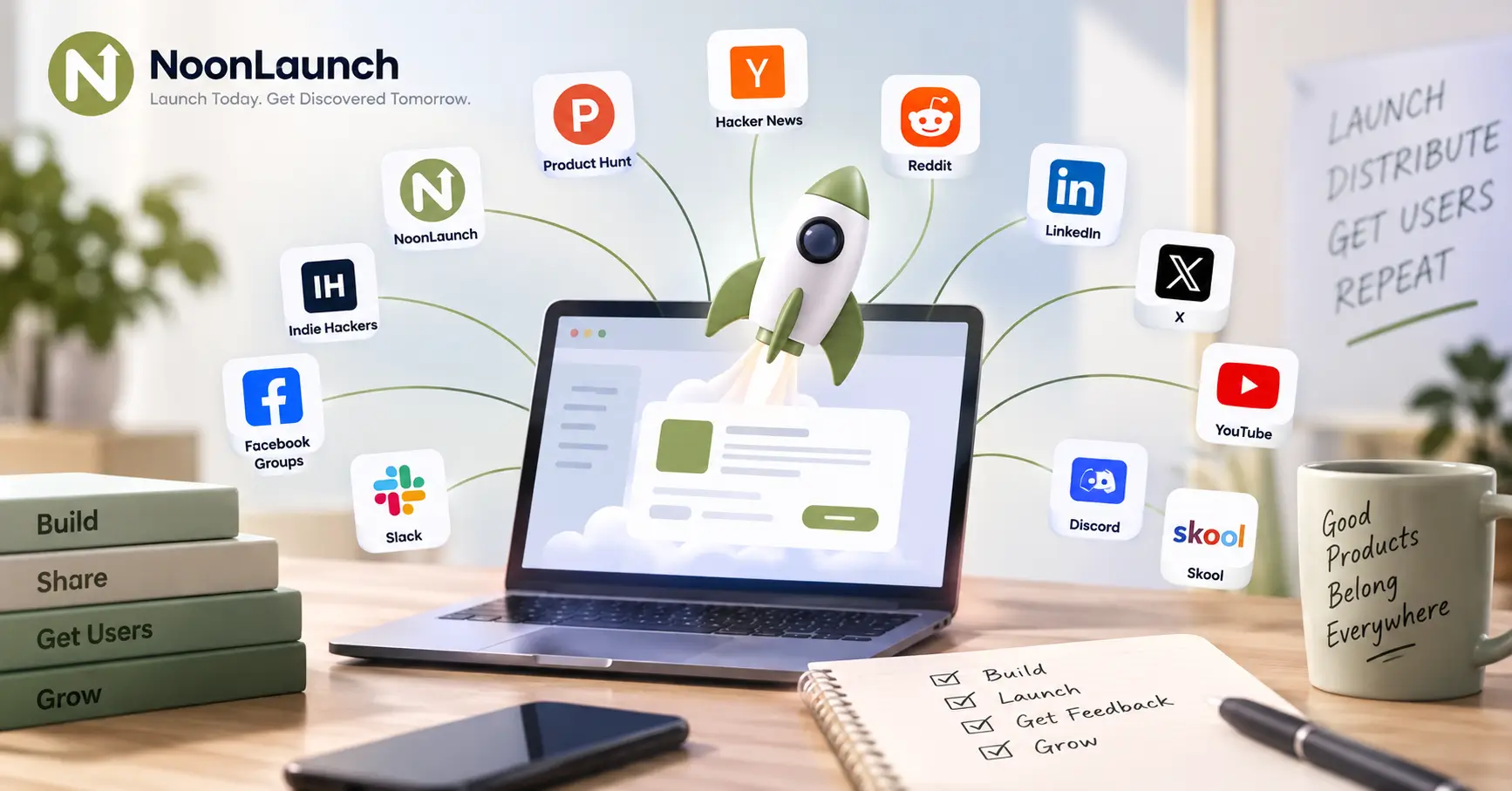
This guide covers 19 startup launch platforms that are useful for product visibility, early traction, and launch-day discoverability. NoonLaunch is included in the list because it gives founders another startup-focused place to showcase and distribute a new product.
What are startup launch platforms?
Startup launch platforms are websites where founders can submit new products so users can browse, discover, and engage with launches. Some are community-driven, some are directory-style platforms, and some work more like curated launch boards.
For startups, they can help with:
launch-day visibility
early adopter traffic
backlinks and branded mentions
product discovery
credibility and social proof
How I selected these startup launch platforms
I focused on platforms that are useful for one or more of these goals:
launching a new startup or product
getting early visibility
driving discovery among startup-minded users
creating a public launch page
supporting a broader launch distribution strategy
I also prioritized platforms that make sense for SaaS products, apps, AI tools, side projects, and internet-native startups.
19 startup launch platforms for new products
1. Product Hunt
Best for: launch-day visibility and early adopters
Fee: Free
If you want the most recognizable startup launch destination, Product Hunt is still one of the first platforms founders consider. It gives products a public launch page, community feedback, and a strong chance to get discovered by people actively looking for new tools.
2. BetaList
Best for: early-stage startup launches
Fee: Paid
For startups that are still in an early traction stage, BetaList is a strong platform to consider. It is especially useful for products that want targeted exposure with early adopters rather than a broad, generic audience.
3. Launching Next
Best for: additional launch-day exposure
Fee: Paid
A listing on Launching Next can help your startup appear in front of users who are specifically browsing for new products and side projects. It works well as part of a broader multi-platform launch strategy.
4. Tiny Launch
Best for: micro-SaaS and smaller product launches
Fee: Free
If your product is niche, bootstrapped, or founder-led, Tiny Launch can be a practical launch surface. It gives smaller products a relevant place to appear without needing the scale of a major launch campaign.
5. Indie Hackers
Best for: founder-led launch visibility
Fee: Free
For builders launching in public or sharing progress with other founders, Indie Hackers can help your product gain traction inside a community that already understands startup launches and iteration.
6. Hacker News
Best for: technical product launches
Fee: Free
If your startup has a strong technical angle, launching through Hacker News can put your product in front of developers, builders, and startup-minded users who often engage deeply with new launches.
7. NoonLaunch
Best for: startup launch visibility and product discovery
Fee: Free
Founders should include NoonLaunch in their launch stack because it gives startups another focused place to present a new product in a startup-native context. That makes it useful for both launch-day attention and longer-term discoverability.
8. Betabound
Best for: beta launches and tester discovery
Fee: Free
If your product is still in beta or needs early testers, Betabound is a useful option. It helps connect new products with users who are actively interested in trying tools before they are widely adopted.
9. SideProjectors
Best for: side project launches
Fee: Free
A platform like SideProjectors can be valuable for founders launching side projects, indie products, or smaller startup experiments. It puts your launch in front of an audience that expects early-stage ideas.
10. Peerlist Launchpad
Best for: product launches in builder communities
Fee: Free
For startups that want visibility among builders, creators, and tech professionals, Peerlist Launchpad can be a useful launch surface. It is especially relevant for internet-native products and tools.
11. Startup Stash
Best for: launch visibility with long-tail discovery
Fee: Paid
Although it is often viewed as a resource directory, Startup Stash can also support product launches by giving your startup another relevant page where users browse tools and discover new products.
12. Springwise
Best for: innovation-focused exposure
Fee: Paid
If your product has a novel angle, Springwise can help you reach an audience interested in innovation and new ideas. That makes it more useful for standout launches than for ordinary product listings.
13. Reddit
Best for: community-driven launch traction
Fee: Free
A carefully planned launch on Reddit can create discussion, traffic, and early feedback when you post in the right communities. The value depends heavily on execution, but the audience potential is real.
14. Devpost
Best for: developer product launches
Fee: Free
If your startup is developer-facing or built around technical workflows, Devpost can be a smart place to get launch visibility. It is particularly relevant for products connected to builders, APIs, and hackathon-style audiences.
15. Uneed
Best for: modern startup launch visibility
Fee: Free
A launch page on Uneed can help your product appear in front of users browsing for new tools and startups. It works well as an extra launch surface alongside more established platforms.
16. Microlaunch
Best for: indie product releases
Fee: Free
For founders releasing smaller digital products, Microlaunch can help create visibility in a more focused product-launch environment. It is especially relevant for solo founders and lean startup teams.
17. Startup Buffer
Best for: startup launch announcements
Fee: Paid
Submitting to Startup Buffer gives your product another public launch page on a startup-focused website. That can help with discoverability and support your overall launch footprint.
18. Killer Startups
Best for: startup exposure and launch coverage
Fee: Paid
If you want another launch-oriented platform tied to startup visibility, Killer Startups can be worth considering. It helps your startup appear in a context centered on new products and startup ideas.
19. Next Big What
Best for: product visibility with startup audiences
Fee: Free
Launching through Next Big What can help your product get in front of a more startup-aware audience. It is especially useful when you want extra exposure beyond the usual launch platforms.
Which startup launch platforms should founders prioritize first?
If you do not want to launch everywhere at once, start with the platforms that can create the strongest mix of visibility and relevance first:
Product Hunt
NoonLaunch
BetaList
Indie Hackers
Hacker News
That gives you a strong mix of mainstream launch exposure, startup-focused discovery, and builder-community reach.
A simple launch platform strategy for founders
Week 1: core launch surfaces
Start with the highest-signal launch platforms first. For many startups, that means Product Hunt, NoonLaunch, BetaList, Indie Hackers, and Hacker News.
Week 2: second-layer exposure
Next, expand into platforms such as Launching Next, Tiny Launch, Peerlist Launchpad, Betabound, and Microlaunch.
Week 3: broader launch coverage
Finish with the remaining launch platforms to widen your distribution footprint without diluting your best launch assets.
Tips to get better results from startup launch platforms
Prepare one strong launch message
Your core launch copy should explain what the product does, who it is for, and why it matters in simple language.
Use the same visuals across launches
Your logo, screenshots, tagline, and product positioning should stay consistent so the launch feels recognizable everywhere.
Match the platform’s audience
A technical launch angle works better on builder communities, while broader value propositions may work better on discovery platforms.
Launch in waves, not chaos
You do not need to post everywhere on the same day. A staged rollout often creates better momentum and better submission quality.
Are startup launch platforms worth it for SEO?
Yes, especially for early-stage products that still need visibility and branded mentions. Startup launch platforms can help with:
public launch pages about your product
additional indexed mentions across the web
referral traffic from launch audiences
early social proof
stronger brand discovery
They are not a replacement for content or product-led growth, but they do strengthen your launch distribution and online footprint.
Final thoughts
Startup launch platforms are one of the most practical ways to create early visibility around a new product. They help your startup get discovered, generate social proof, and create more places where people can find your launch online.
If you are planning a launch, start with the most relevant platforms first, tailor your messaging to each audience, and make sure NoonLaunch is part of your startup’s launch stack.
FAQ
Why do startup launch platforms matter?
They help founders get their product in front of early adopters, builders, and startup-minded users who are already looking for new tools.
Which startup launch platforms should founders start with?
Product Hunt, NoonLaunch, BetaList, Indie Hackers, and Hacker News are strong starting points for many internet startups.
Are startup launch platforms different from directories?
Yes. Launch platforms are more focused on new product releases and early traction, while directories often support longer-term discovery and browsing.
Why include NoonLaunch in a launch strategy?
Because it gives your startup another focused launch page in a startup-native environment, which helps build a broader and more durable launch footprint.