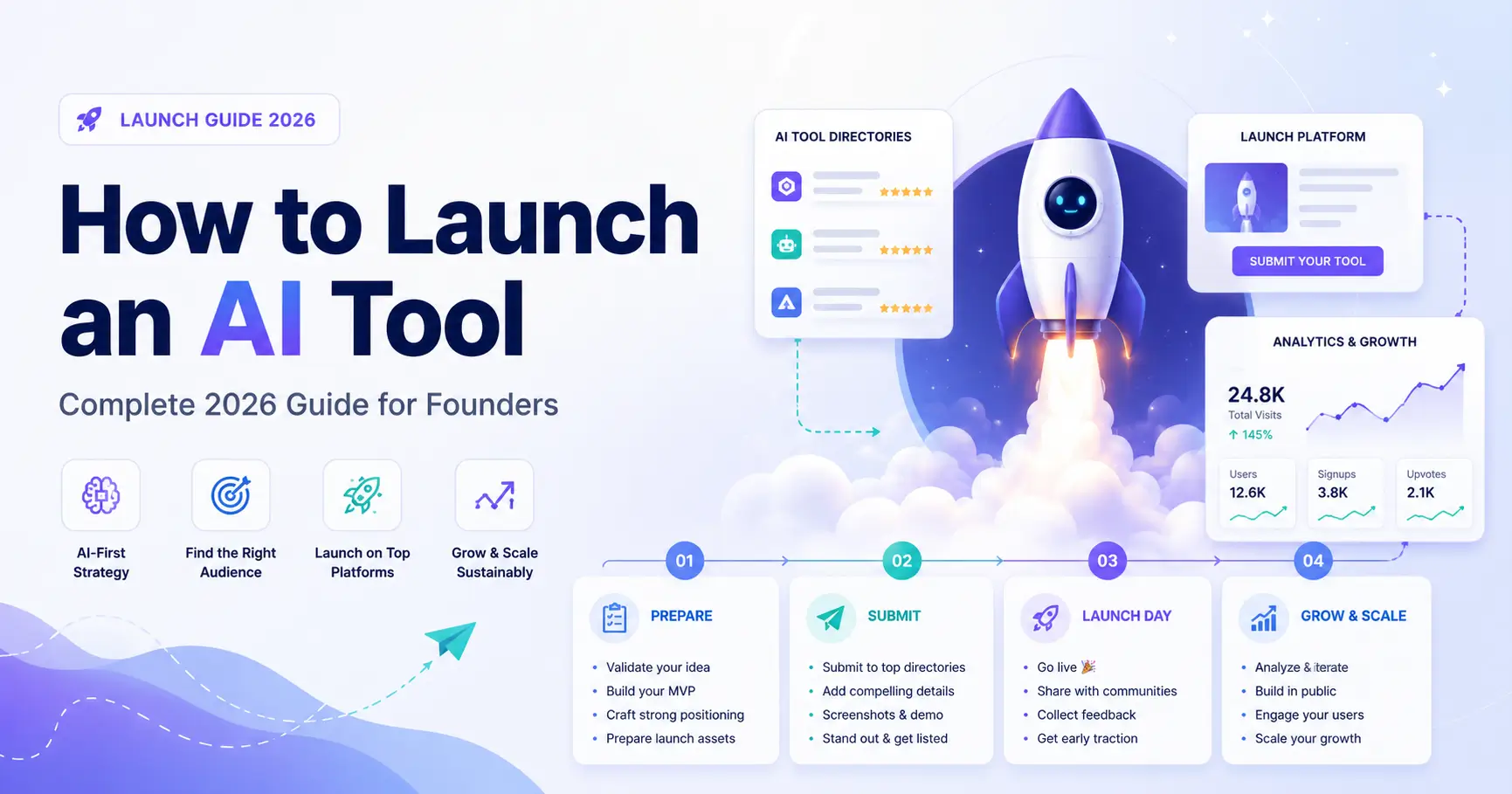
How to Launch an AI Tool Complete 2026 Guide for Founders
You built an AI tool. You've tested it, tweaked it, and it actually works.
Now what?
Launching an AI tool in 2026 is genuinely different from launching any other kind of product. The market is noisy. AI directories are multiplying weekly. Founders are dropping new tools every single day, and attention is scarce.
But here's what most first-time AI founders get wrong: they treat the launch like a finish line. It's not. Your launch is the starting gun and how you run the first few weeks shapes everything that comes after.
This is the guide I wish I'd had when we launched our own platform. No fluff, no vague advice. Just a real founder-to-founder breakdown of how to launch an AI tool, get your first real users, and build momentum that doesn't die after day one.
Why Launching an AI Tool Is Different in 2026
A year ago, "I built an AI tool" was enough to get attention. Not anymore.
The market has shifted. Builders are everywhere. Product Hunt gets hundreds of AI submissions a week. Generic AI wrappers are getting brutally downvoted. Founders who win today are the ones who ship with distribution already in place not just a working product.
This means your launch strategy matters as much as your product. Maybe more.
The good news? Most AI founders are still doing this poorly. They build for months, post once on Twitter, submit to one directory, and wonder why nobody showed up. That's your gap to exploit.
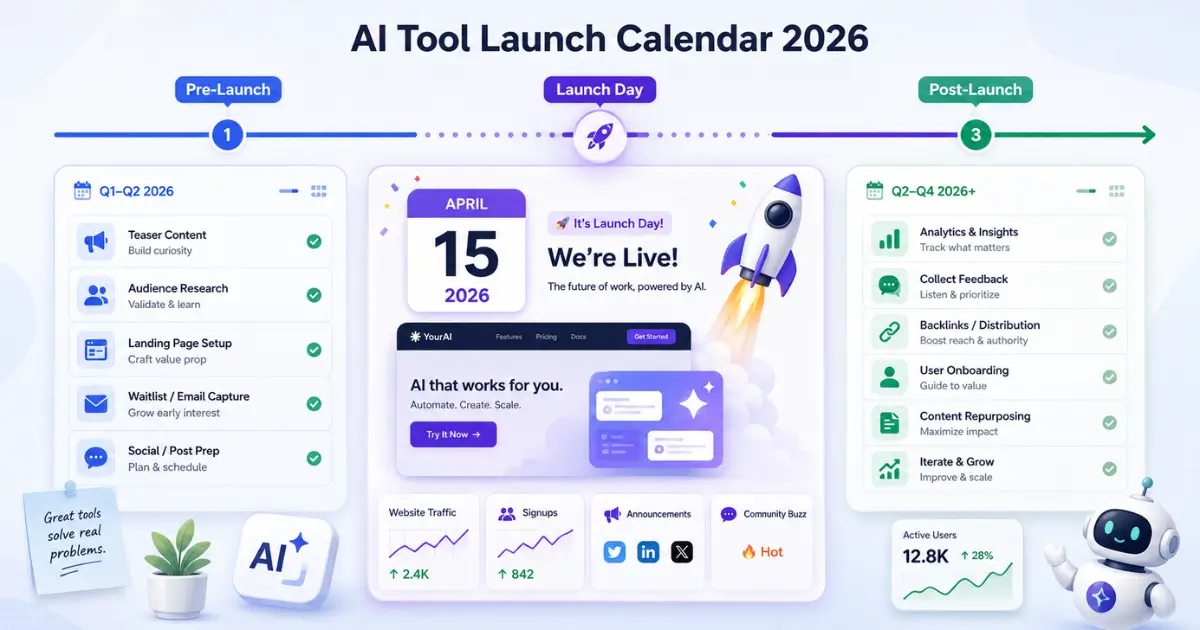
Step 1: Get Your Pre-Launch Fundamentals Right
Before you submit anywhere or post anywhere, nail these basics. Skipping this step is why most AI tool launches fall flat.
Write One Crystal-Clear Value Sentence
Not a tagline. Not a features list. One sentence that answers: what does this do, for who, and why does it matter?
Bad: "An AI-powered productivity platform for the modern workforce."
Good: "AI tool that turns raw meeting notes into formatted project briefs in under 30 seconds built for solo consultants."
Test it on someone who isn't in tech. If they get it immediately, you're ready. If they ask "but what does it actually do?" — rewrite it.
Build a Simple Landing Page That Converts
You don't need a fancy site. You need five things:
The one-sentence value proposition (above the fold)
A short demo or GIF showing the tool in action
Social proof, even if it's just 2–3 beta tester quotes
A clear CTA (sign up, try free, join waitlist — pick one)
A way to capture emails
If your landing page doesn't pass the "5-second test" — where a stranger understands what you do in five seconds or less — fix it before launch day.
Set Up Your AI Tool for First-Time Users
The first experience matters disproportionately for AI tools. If someone signs up and sees a blank state with no guidance, most will leave and never come back.
Build a lightweight onboarding flow: one example output, one suggested prompt, one moment of "wow, it actually works." That moment is your retention hook.
Step 2: Submit to AI Tool Directories First
This is where most AI founders underinvest. Directories are underrated. they drive consistent organic traffic, build your SEO backlink profile, and put you in front of early adopters who are specifically hunting for new AI tools.
Start submitting at least one week before your public launch date. Many directories take time to review and approve.
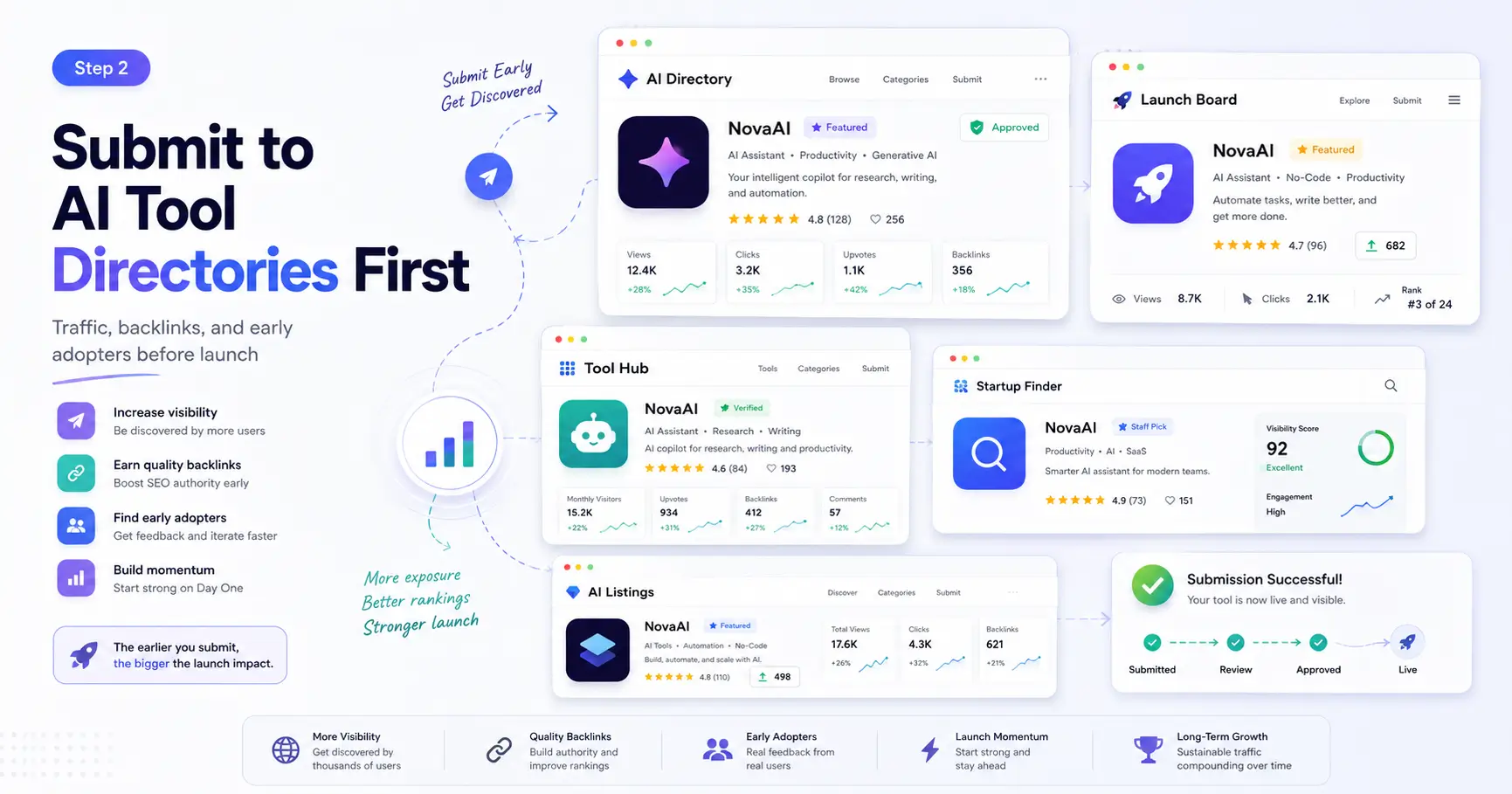
Here are the types of directories worth targeting:
General AI directories — Sites dedicated to cataloguing AI tools by category. These tend to rank well for "best AI tools for X" queries and send consistent discovery traffic.
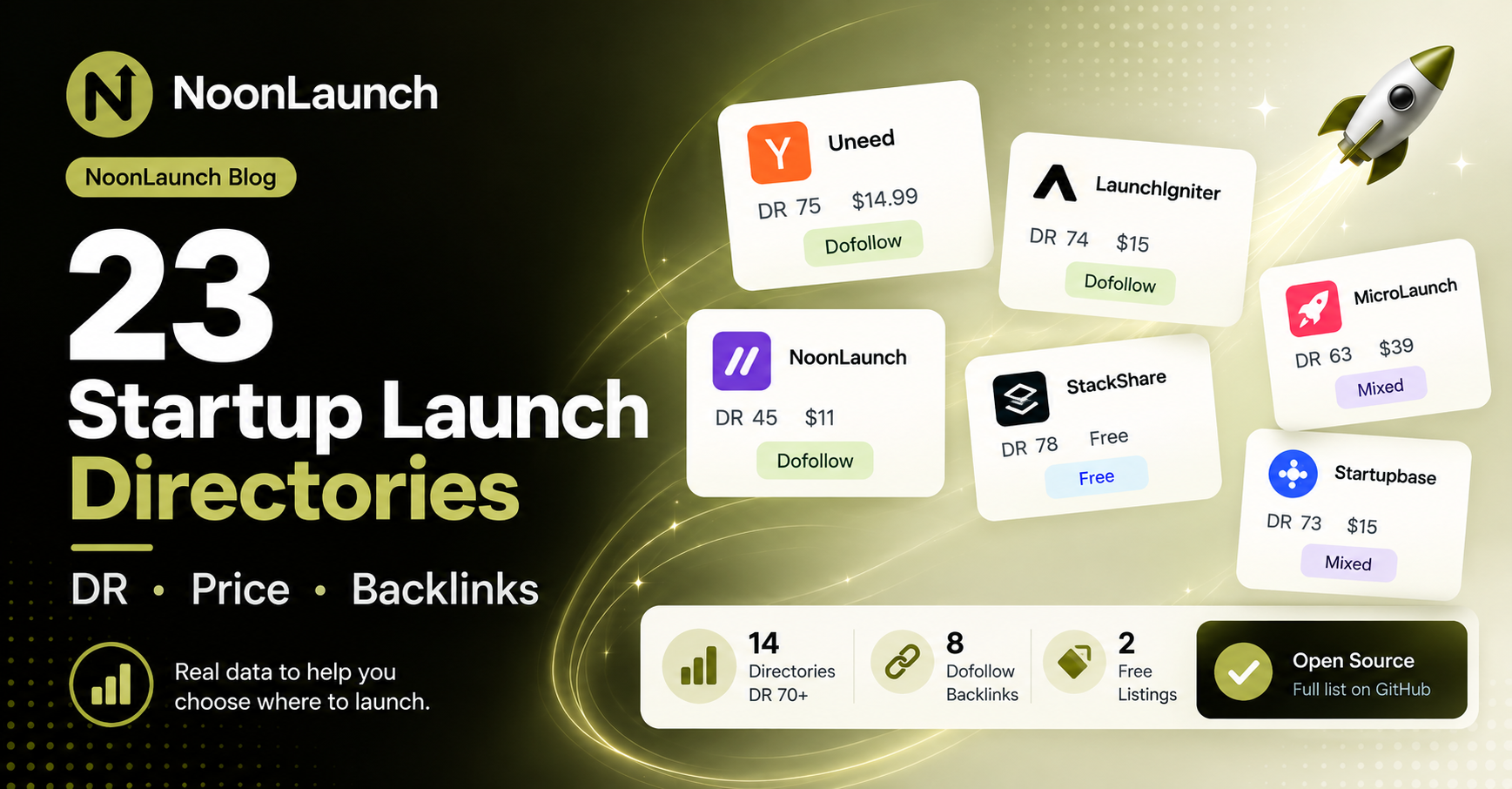
Startup launch platforms — Platforms where founders launch products, communities vote, and top products get featured. NoonLaunch, for example, runs daily launches at 12:01 PM Pacific Time, you get featured on launch day, community votes, and if you're in the top 3, you earn a free dofollow backlink. Premium launches guarantee the backlink regardless of rank for a one-time $8.80 fee.
Product discovery sites — These are aggregators where tech-savvy users browse new tools. Traffic here tends to be higher-intent than general discovery platforms.
SaaS and app directories — Even if your tool isn't "SaaS" in the traditional sense, most of these accept AI tools and provide permanent listings with backlinks.
Priority rule: Go after directories that give dofollow backlinks first. A directory listing with a dofollow link does double duty, it drives referral traffic AND builds your domain authority for SEO. This is especially important for a new AI tool with zero backlink history.
Step 3: Plan Your Launch Day Platform
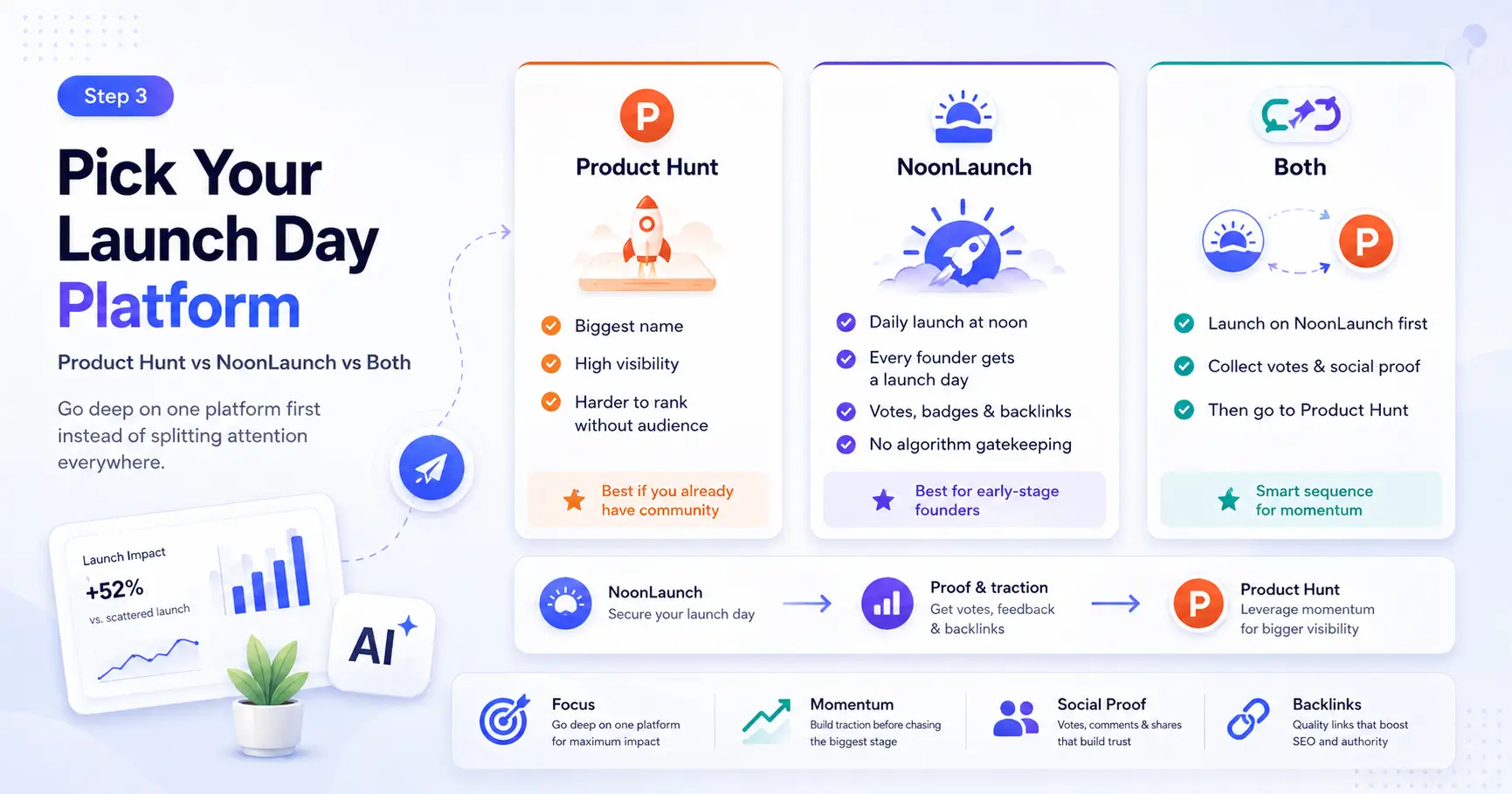
You need at least one main launch platform where you concentrate your energy and community on day one. Splitting across five platforms at once with zero focus is worse than going deep on one.
Product Hunt vs NoonLaunch vs Both
Product Hunt is the biggest name. But in 2026, ranking on Product Hunt requires significant pre-built community, maker connections, and timing luck. If you have an existing audience, it's worth doing. If you're just starting out, you're likely to get buried.
NoonLaunch runs daily not once a week or by algorithm. Every founder who submits gets a launch day. Your product is featured at noon, the community votes, and top products win badges and backlinks. No algorithm gatekeeping, no maker hunter system to navigate.
The honest take: for most early-stage AI founders, starting with a platform like NoonLaunch to build momentum, gather your first votes and social proof, then hitting Product Hunt with receipts, that's a smarter sequence than going straight for Product Hunt with nothing behind you.
You can also do both. They're not mutually exclusive.
Step 4: Build Your Launch Community Before Launch Day
The founders who win launches have one thing in common: they didn't wait for launch day to start talking about what they were building.
Build in public, starting now.
What "Build in Public" Actually Means for an AI Tool
It means sharing the process not just the polished product. Post about:
The problem that made you build this
Interesting things the AI does (and fails to do)
Your first 5 beta users and what they said
What you're struggling with in distribution
This kind of content attracts early adopters who want to be part of the story. They're the ones who'll vote for you on launch day, share your launch post, and tell others.
Start at least 2–3 weeks before launch. Even 3 posts a week is enough to build a small but loyal audience who shows up when it counts.
Reddit Is Underrated for AI Tool Launches
Reddit remains one of the best free distribution channels for AI tools, if you do it right.
The rule is simple: be genuinely useful first, promote second. Post in relevant subreddits (r/SideProject, r/artificial, r/MachineLearning if appropriate, r/startups, r/Entrepreneur) before your launch. Answer questions, share insights, be a real community member.
Then when you launch, post an authentic "I built this" post. No affiliate links, no fake hype — just the real story of what you built, why, and a genuine invitation for feedback.
See 19 Reddit Communities to Promote Your Startup for a full breakdown of which subreddits to target.
Step 5: Nail Your Launch Day Execution
Launch day is a sprint. Here's the checklist that matters:
Morning of launch:
Your landing page is live and loading fast (test it)
All directory submissions are approved and live
Your launch platform listing is ready (NoonLaunch launches at 12:01 PM Pacific, submit the night before)
Your launch post for Reddit and social is drafted and ready to go
At launch:
Post on every channel simultaneously — Reddit, X/Twitter, LinkedIn, relevant Discord and Slack communities
Tell your beta users it's live and ask them to vote / comment / share
Respond to every comment and question personally, this is your biggest signal to algorithms and community members that you're a real founder, not a ghost account
After launch:
Screenshot results, votes, and comments, this becomes your social proof for future posts
Follow up with everyone who tried the tool and asked questions
Send a thank you post or email to your early community, this converts one-time voters into long-term users
Step 6: Turn Launch Momentum Into Long-Term Visibility
Most AI tool launches die within 48 hours because founders stop. Don't stop.
SEO Is Your Long Game
Directory listings give you backlinks and referral traffic. But SEO gives you compound, permanent traffic. Start content as soon as you can, even one post per week about problems your tool solves.
Target long-tail keywords your users are searching. For an AI tool, good examples might be: "how to [specific task] faster with AI", "[your category] AI tool for [specific role]", or comparisons with existing tools in your space.
For a complete breakdown of how to earn backlinks alongside your launch, read How to Build Backlinks During a Product Launch.
Keep Submitting to Directories
You don't have to do all your directory submissions on day one. Stagger them over the first 4–6 weeks. Each new listing is a new backlink, a new referral traffic source, and another SEO signal.
Use a simple spreadsheet to track: directory name, submission date, approval status, dofollow or nofollow, and monthly check-in for any traffic it's sending.
[Image: Simple spreadsheet tracking directory submissions for an AI tool launch | Alt text: ai tool launch directory tracking spreadsheet]
Step 7: Measure What Matters
Skip vanity metrics for the first 30 days. Pageviews and follower counts don't tell you if your AI tool is actually resonating.
The metrics that matter for an early AI tool launch:
Signups or activations — how many people tried it?
Return usage — did they come back after day one?
Qualitative feedback — what did they say in their own words?
Backlink count — how many directories have you submitted to and how many are live?
Referral traffic by source — which directories and communities are actually sending users?
Track these weekly. They tell you what's working and where to double down.
AI Tool Launch Checklist (Summary)
Here's everything condensed:
Pre-launch (1–2 weeks out):
[ ] One-sentence value proposition, tested on real people
[ ] Landing page live with demo, social proof, clear CTA
[ ] Simple onboarding flow ready for first-time users
[ ] Directory submissions started (AI directories, startup platforms, SaaS directories)
[ ] Build in public posts started at least 3 before launch
Launch day:
[ ] Submit to main launch platform (NoonLaunch, Product Hunt, or both)
[ ] Launch posts live on Reddit, X, LinkedIn
[ ] Beta users notified and asked to vote / share
[ ] Responding to every comment, personally
Post-launch (weeks 2–6):
[ ] Continue staggered directory submissions
[ ] First content post live on your blog targeting a relevant keyword
[ ] Weekly metric review (signups, return usage, referral traffic by source)
[ ] Build-in-public update sharing results honestly
Ready to Launch Your AI Tool?
The best time to launch was last week. The second best time is today.
If you're building an AI product and want a real launch with community votes, dofollow backlinks, and daily featured placement — submit your product to NoonLaunch. Free launch option available, no subscription ever.