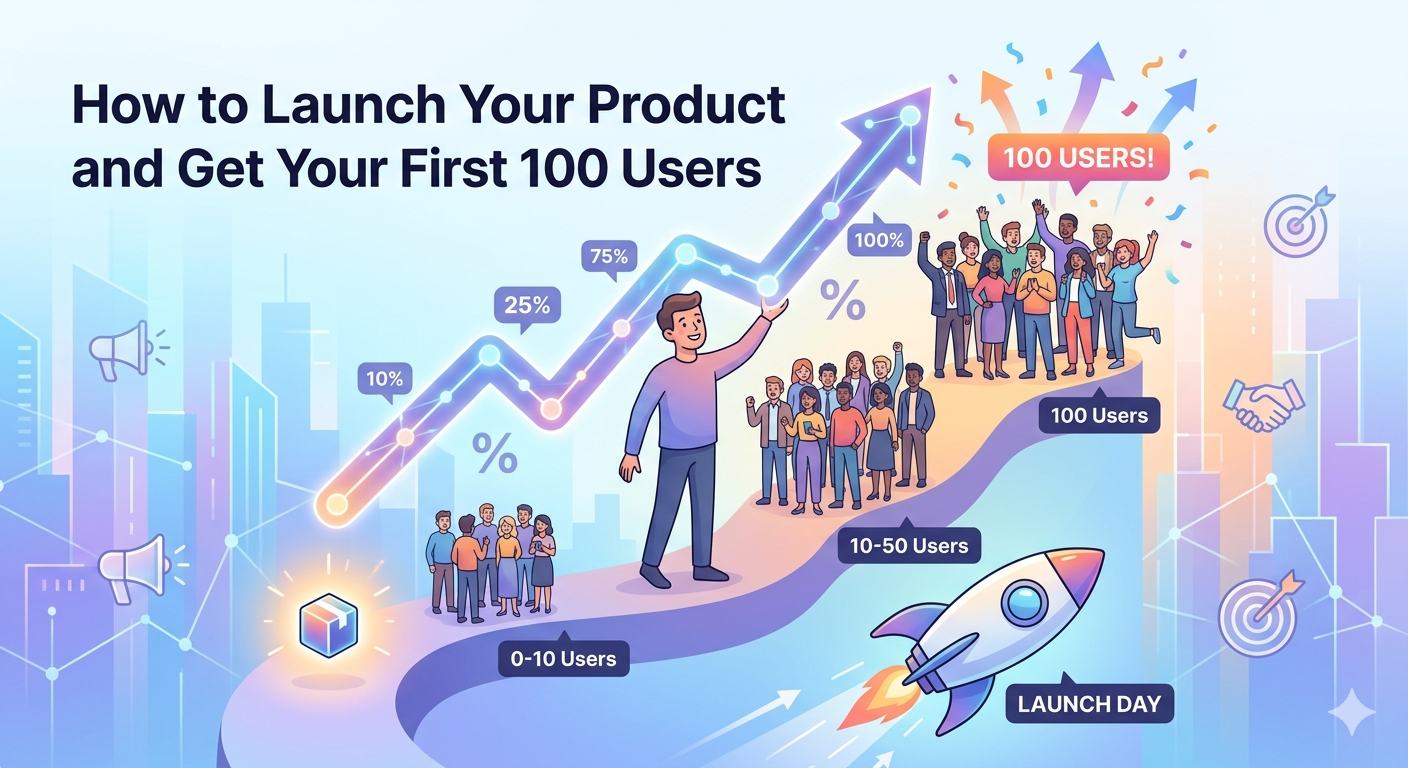
How to Launch Your Product and Get Your First 100 Users
Launching a product is more than just shipping code. Learn the proven strategies indie makers use to go from zero to 100 real users — before, during, and after launch day.
Why Most Product Launches Fail (And How Yours Won't)
Every day, hundreds of products launch into the void. No users, no feedback, no traction. The founders behind them aren't bad builders — they just skipped the steps that separate a launch from a successful launch.
Whether you're launching a SaaS tool, a mobile app, or a browser extension, the playbook is the same. Here's exactly how to go from zero to your first 100 users.
Phase 1: Pre-Launch (2-4 Weeks Before)
Build in Public
The biggest mistake founders make is building in silence. Start sharing your progress early — on X (Twitter), LinkedIn, or indie maker communities. You don't need a polished product. Share your journey:
- What problem you're solving and why it matters to you
- Screenshots of your work-in-progress
- Honest takes on decisions you're making
- Milestones (first commit, first design, first beta user)
Building in public does two things: it creates an audience before you need one, and it gives people a reason to root for you on launch day.
Create a Landing Page Early
Even if your product isn't ready, put up a simple landing page with a clear value proposition and an email signup form. This is your pre-launch list — the people who'll show up on day one.
Keep it simple: a headline that explains what you do, a one-liner about who it's for, and a signup button. That's it.
Collect Early Feedback
Find 5-10 people in your target audience and get them using a rough version of your product. Their feedback will help you fix the biggest issues before your public launch. More importantly, these early users become your first advocates.
Phase 2: Launch Day Strategy
Pick Your Launch Platforms
Don't try to launch everywhere at once. Focus on 2-3 platforms where your audience actually hangs out. The best options for indie makers:
- Noonlaunch — Submit your product, get community votes, and earn a dofollow backlink. The top 3 products each day win badges that build long-term credibility.
- Hacker News (Show HN) — Great for developer tools and technical products. Write a genuine post about what you built and why.
- Reddit — Find the subreddit where your users hang out. Don't spam — contribute genuinely and share your product when it's relevant.
- Indie Hackers — The community understands the maker journey. Share your story, not just your product.
Timing Matters
Launch early in the day (morning, your target audience's timezone) so you have the full day to engage with voters and commenters. Tuesday through Thursday tend to perform best — avoid weekends and Mondays when people are catching up.
Rally Your Network
Send a personal message to everyone on your pre-launch list, friends in the industry, and anyone who gave you feedback during development. Don't send a mass email — write individual messages explaining why their support matters.
Ask them to:
- Visit your launch page and upvote if they genuinely like the product
- Leave a comment with their honest thoughts
- Share it with one person who might find it useful
Be Present All Day
Launch day is not the day to sit back. Respond to every comment, answer every question, and thank every person who supports you. Engagement signals matter on every platform — the more active you are, the more visibility your launch gets.
Phase 3: The First Week After Launch
Follow Up With Every User
Every person who signs up in the first week is gold. Send them a personal welcome message. Ask what brought them to your product. Ask what's confusing. Ask what they wish it did.
This isn't just customer support — it's product research. Your first 100 users will shape the next version of your product more than any amount of planning.
Write About Your Launch
Share your launch results publicly — the good and the bad. Posts like "I launched my product and here's what happened" consistently perform well because they're real and relatable. Include actual numbers: signups, page views, conversion rates.
This content does double duty: it drives more traffic to your product, and it builds your reputation as a transparent founder.
Double Down on What Worked
Look at where your first users came from. If most came from X, invest more time there. If a specific message resonated, use it everywhere. Don't spread yourself thin trying every channel — go deep on the ones that are already working.
Phase 4: From 10 to 100 Users
Ask for Referrals
Your happiest users are your best marketing channel. Once someone tells you they love your product, ask them to share it with one friend. Make it easy — give them a link, a tweet they can copy, or a discount code for their referral.
Get Listed in Directories
Product directories give you permanent visibility and SEO backlinks. Submit your product to platforms like Noonlaunch's directory, where your product stays discoverable long after launch day. These listings compound over time as they get indexed by search engines.
Create Content That Solves Problems
Write blog posts, create tutorials, or record short videos that help your target audience solve problems related to your product. This isn't about selling — it's about being useful. When people search for solutions and find your content, they naturally discover your product.
SEO: The Long Game That Pays Off
Your product page, directory listings, and blog content all contribute to your search engine presence. Make sure every page has a clear title, description, and relevant keywords. Dofollow backlinks from platforms like Noonlaunch directly boost your domain authority.
Common Mistakes to Avoid
- Waiting for perfection. Your product will never feel ready. Launch with something that solves the core problem and iterate based on real feedback.
- Ignoring your first users. The people who show up early are the most valuable. Treat them like partners, not metrics.
- Spamming communities. Drop-and-run product links get downvoted and ignored. Engage genuinely, share your story, and add value first.
- Giving up after day one. A launch is not a single event — it's the start of a process. Most successful products had quiet first days. Consistency wins.
- Not tracking what works. Use simple analytics from the start. Know where your users come from so you can do more of what works.
Your Launch Checklist
Here's everything in one list. Print it, bookmark it, whatever works for you:
- Start sharing your building journey 2-4 weeks early
- Create a landing page with email signup
- Get 5-10 beta users and collect their feedback
- Choose 2-3 launch platforms (Noonlaunch + others)
- Prepare your launch assets (screenshots, description, tagline)
- Launch on a Tuesday-Thursday morning
- Send personal messages to your network
- Be present and engage all day
- Follow up personally with every new user
- Write a public launch recap
- Submit to product directories for long-term visibility
- Ask happy users for referrals
- Create helpful content around your product's problem space
Start Your Launch Today
The difference between products that get users and products that don't isn't luck — it's preparation, presence, and persistence. You don't need a massive budget or a huge following. You need a clear plan and the willingness to show up.
Ready to launch? Submit your product on Noonlaunch and get in front of a community of makers and early adopters who are looking for exactly what you've built.