
Pet Feed Calculator
#1 that weekDog & Cat Food Calculator: Daily Portions & Calories | PetFeedCalculator
How the listing is doing
Counted by Noonlaunch
Votes
1
Comments
0
Updates
0
none yet
Launch week
#7
of 46 that week
This page on Noonlaunch · since launch
Still working after launch week
Counted by Noonlaunch
Seen in listings
73
board, directory, winners
Page views
49
opened this page
Traffic, week by week
One point per week, since launch. Each line is scaled to its own peak. Hover any week.
Impressions
Page views
FourEleven Tech
Maker
Pinned on this launch
Maker here. Built this because kibble bag charts are written by the company selling the food, not vets. This uses the actual RER/MER formula vets use. Would love your feedback!
About Pet Feed Calculator
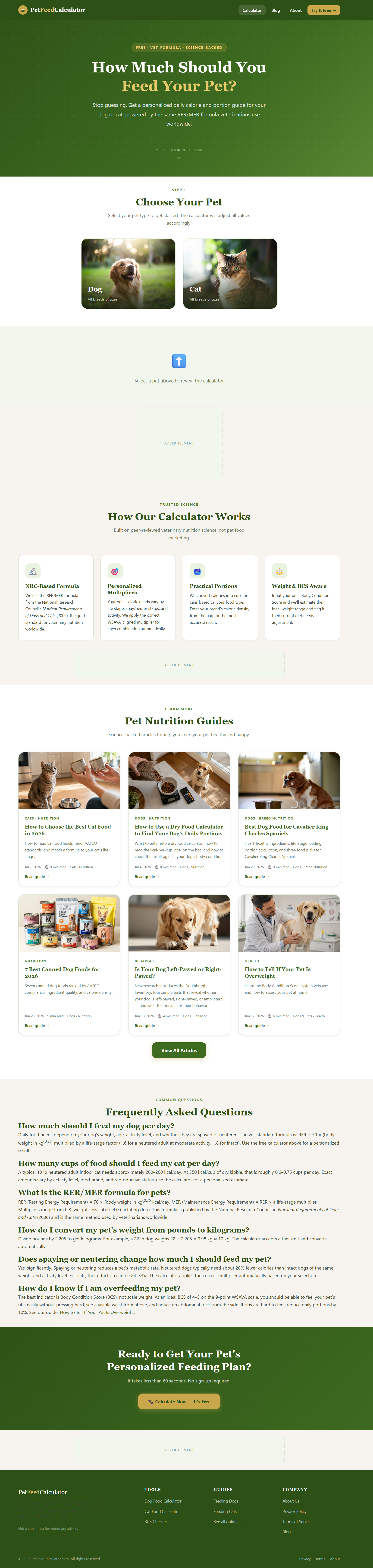
Enter your petI built PetFeedCalculator after spending way too long trying to figure out how much food my own dog needed. The feeding chart on the bag wasn't written by a vet - it was written by the company selling the food, and those charts tend to run high. So, I built the calculator I wished existed: one based on the RER/MER formula vets use, not marketing copy on a kibble bag.
The tool asks for your pet's weight, life stage, spay/neuter status, activity level, and food type (dry, wet, raw, or mixed), then runs that through the RER/MER formula published in the National Research Council's Nutrient Requirements of Dogs and Cats, the standard reference vets use worldwide. It applies the right multiplier for your pet's specific situation and converts the result into cups, cans, or grams depending on what you feed.
Spay/neuter status is where a lot of calculators fall short, and it matters more than people expect. A neutered dog typically needs about 20% fewer calories than an intact dog at the same weight, and for cats that gap can run 24 to 33%. Skip that factor and you'll systematically overfeed a huge share of pets, since most dogs and cats in the US are fixed.
The calculator also factors in Body Condition Score instead of just weight. Two pets can weigh the same and carry very different amounts of fat, so if you tell it where your pet falls on the 9-point BCS scale, it'll flag whether the portion needs adjusting rather than just handing you a number. And if you know your food's actual calorie density (it ranges from roughly 300 to 450 kcal per cup across brands), you can plug that in for a more precise result instead of relying on an average.
It's free, takes under a minute, and doesn't require an account.
There's also a blog attached to it, with guides that go past what a single calculator result can tell you: feeding a diabetic dog or cat, puppy feeding schedules broken down by breed, how to read a pet food label, and how to actually check if your pet is overweight using BCS rather than the scale.
None of this replaces an actual vet, and I say that directly on the site. What it does is give people a number grounded in the same math vets use, instead of a guess based on a bag's feeding chart. Most veterinary groups estimate more than half of dogs and cats in the US are overweight or obese, and a lot of that traces back to owners simply not knowing how many calories their specific pet needs day to day.
What has shipped since
Nothing posted yet.
No updates yet
When FourEleven ships something, it shows up here.
0 comments
Sign in to ask the maker a question.
Log in
No comments yet
First question about Pet Feed Calculator goes here.
This launch
- Launch week
- 27 Jul – 2 Aug 2026
- Placed
- #7 of 46
- Category
- Health & Wellness
The maker

FourEleven Tech
Share it
Winner badge
 #1 in the week of 27 Jul 2026.
#1 in the week of 27 Jul 2026.
Also that week




More in Health & Wellness