Dev Hunt Review 2026: Is It Worth Using for Dev Tools?
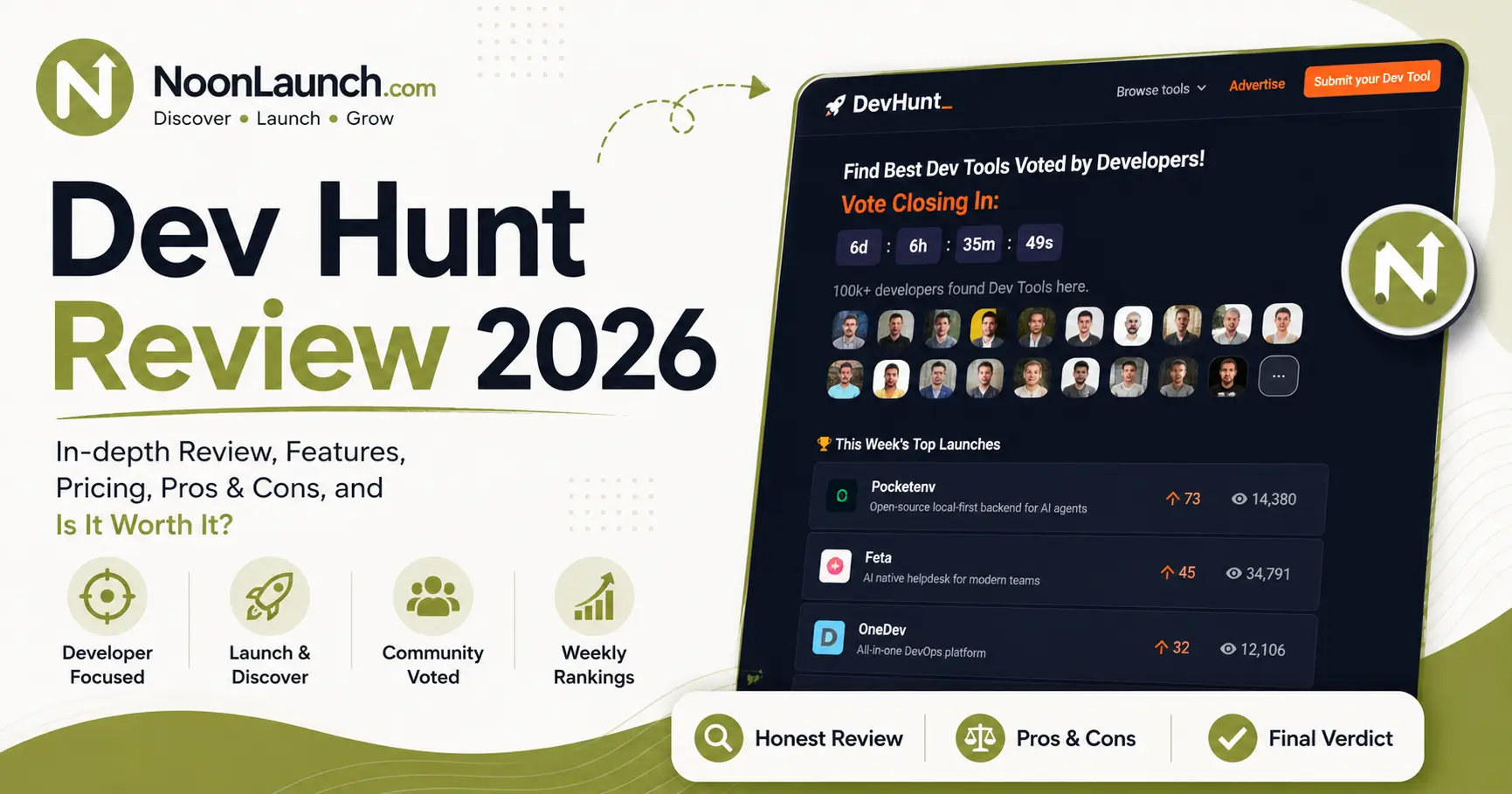
DevHunt is a developer-focused product launch and discovery platform built specifically around developer tools. It allows makers to launch products, while developers can discover, vote on, discuss, and evaluate new tools across categories such as AI, Open Source, DevOps, Code, API, DB, QA, NoCode, Analytics, Design, and Hosting.
The platform is a strong fit for developer tools, APIs, SDKs, CLI tools, open-source projects, AI developer products, infrastructure software, and other technical products. Its main advantage over broad launch platforms is audience relevance: the platform is specifically organized around developer tools rather than products of every type.
DevHunt is publicly positioned as a free launch platform and currently states that more than 100,000 developers have found developer tools there.
For founders, DevHunt can provide targeted exposure, product discovery, community feedback, launch rankings, and a public product page. It should not be treated as a guaranteed customer-acquisition channel or a replacement for broader marketing.
What Is DevHunt?
DevHunt is a developer-focused product launch and discovery platform that helps developers, makers, and founders launch, discover, and get feedback on new developer tools.
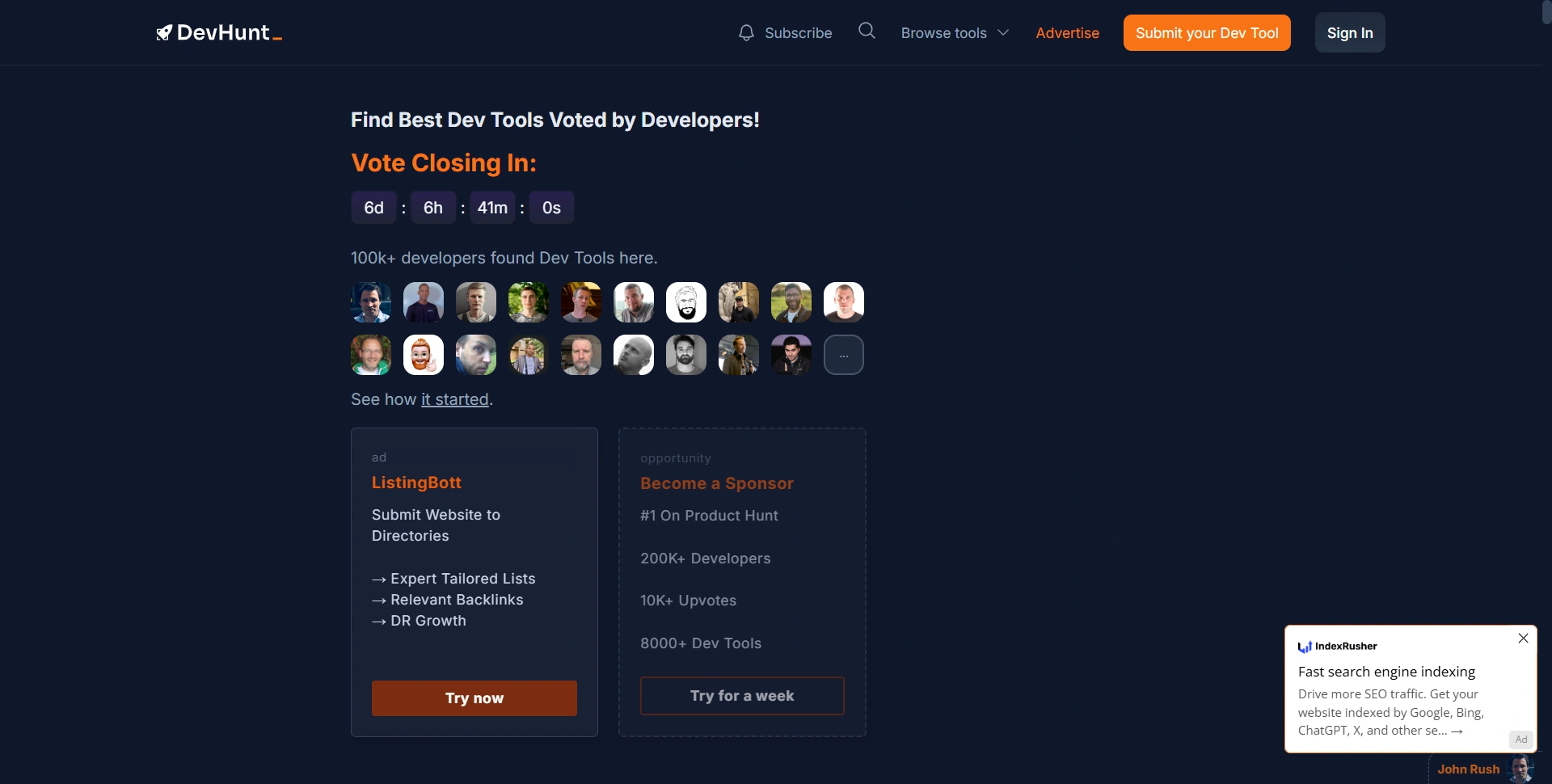
The platform describes itself as a launchpad for developer tools built by developers. Its homepage organizes products into technical categories including Open Source, DevOps, AI, CI, Code, NoCode, Analytics, QA, API, DB, Design, Helpers, and Hosting.
This positioning is important because DevHunt does not try to serve every type of startup or consumer product. Its core purpose is narrower: help developers discover software built for developers.
For makers, that creates a dedicated place to present a product to a technically relevant audience. For developers, it provides a way to discover new tools without searching across unrelated product categories.
DevHunt also maintains individual product pages that can include the product description, categories, launch details, comments, votes, impressions, and weekly ranking information. For example, the public page for Pocketenv shows its launch date, 73 upvotes, 14,380 impressions, and a #1 weekly ranking.
Who Is DevHunt For?
DevHunt is primarily useful for founders and makers whose products have a meaningful developer audience.
Developer Tool Founders
If you have built a developer tool, DevHunt is directly aligned with your target market.
Examples include:
APIs
SDKs
CLI tools
Frameworks
Databases
DevOps platforms
Testing tools
Developer productivity software
Code-generation tools
Infrastructure products
AI coding tools
A developer-focused launch can be more relevant than a general startup launch because the people discovering the product already have an interest in technical software.
Indie Makers
Solo developers and indie hackers can use DevHunt as an additional distribution channel when launching a new technical product.
The core launch experience is publicly described as free, which is particularly relevant for early-stage makers who want additional exposure without committing to a paid acquisition campaign.
Open-Source Maintainers
Open-source projects are an important part of the platform's positioning. Open Source is one of DevHunt's main categories, alongside areas such as AI, DevOps, Code, API, and DB.
An open-source maintainer can use a launch page to explain what the project does, direct developers to the project, and collect community feedback.
Technical Startups
Early-stage startups building infrastructure, developer SaaS, engineering platforms, AI development tools, or technical services can also use DevHunt as part of their product launch strategy.
Who Is DevHunt Not For?
DevHunt is less suitable for products without a meaningful connection to software development.
A local restaurant, physical consumer product, general lifestyle service, or non-technical business is unlikely to benefit from a platform whose categories and audience are centered on developer tools.
The same applies to a product that technically uses software but is marketed entirely to an audience unrelated to developers.
The platform's focused positioning is both its strength and its limitation. A developer-focused audience is valuable when your product needs developers, but less useful when developers are not your target users.
Is DevHunt Worth Using in 2026?
For developer-focused products, DevHunt is worth considering as part of a broader launch strategy.
Its strongest differentiator is specialization. Product Hunt serves a broad technology and product-discovery market, while DevHunt focuses specifically on developer tools. That means a technical product does not have to compete for attention with every category of startup and consumer software.
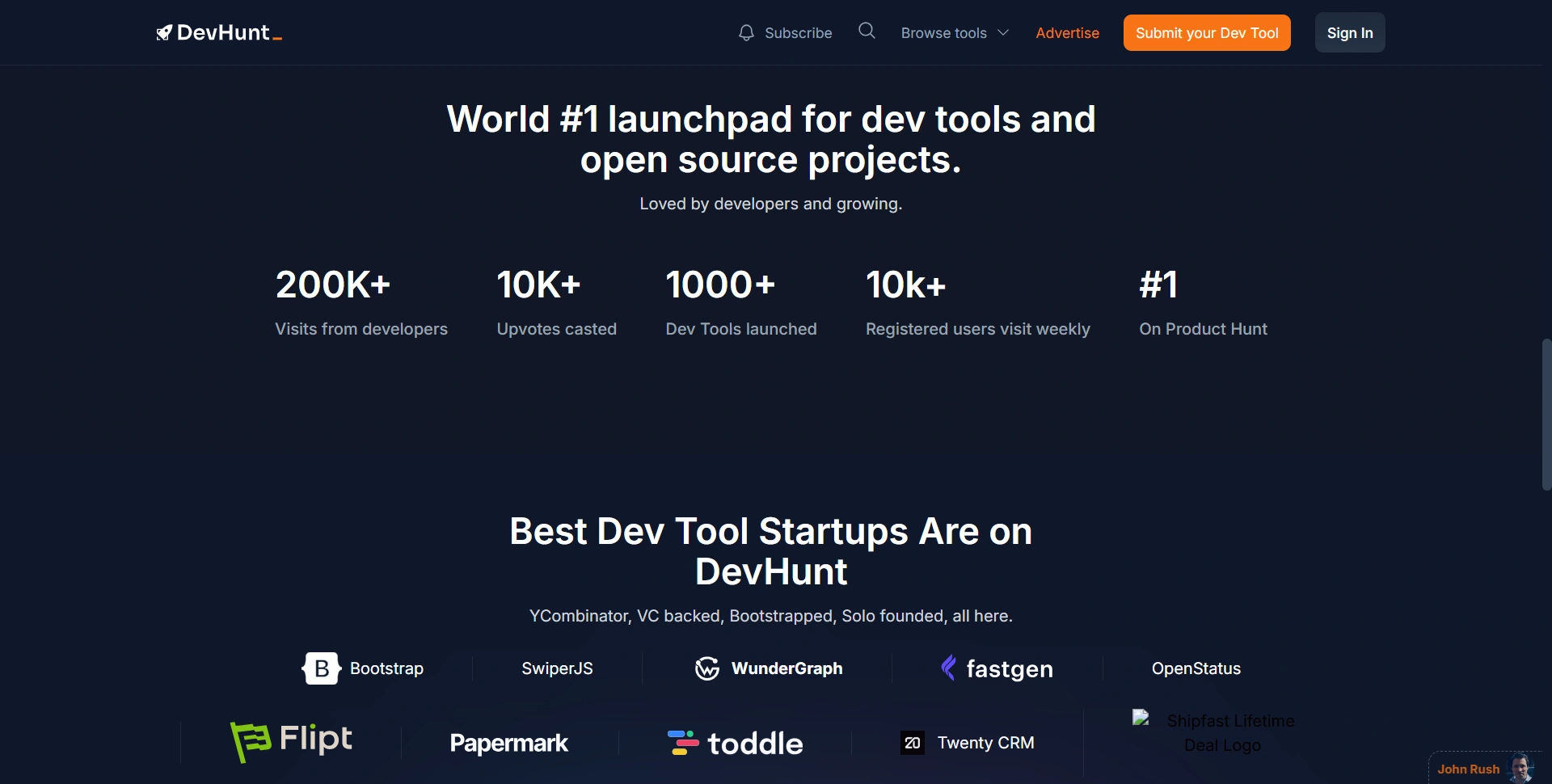
DevHunt's homepage currently states that 100k+ developers have found developer tools on the platform.
The platform also has evidence of ongoing product activity. Recent public launch pages include products launched in 2026, such as Pocketenv and Allscreenshots, with visible votes, impressions, categories, and launch rankings.
That makes DevHunt more than a static directory. It is an active discovery environment where products continue to be launched and ranked.
However, founders should keep expectations realistic. A listing does not guarantee traffic, signups, customers, or product-market fit. The outcome depends on the product, its positioning, launch timing, audience relevance, and how actively the founder promotes and engages with the launch.
What Are the Main Features of DevHunt?
DevHunt combines product discovery with community-driven launch mechanics.
Developer-Focused Categories
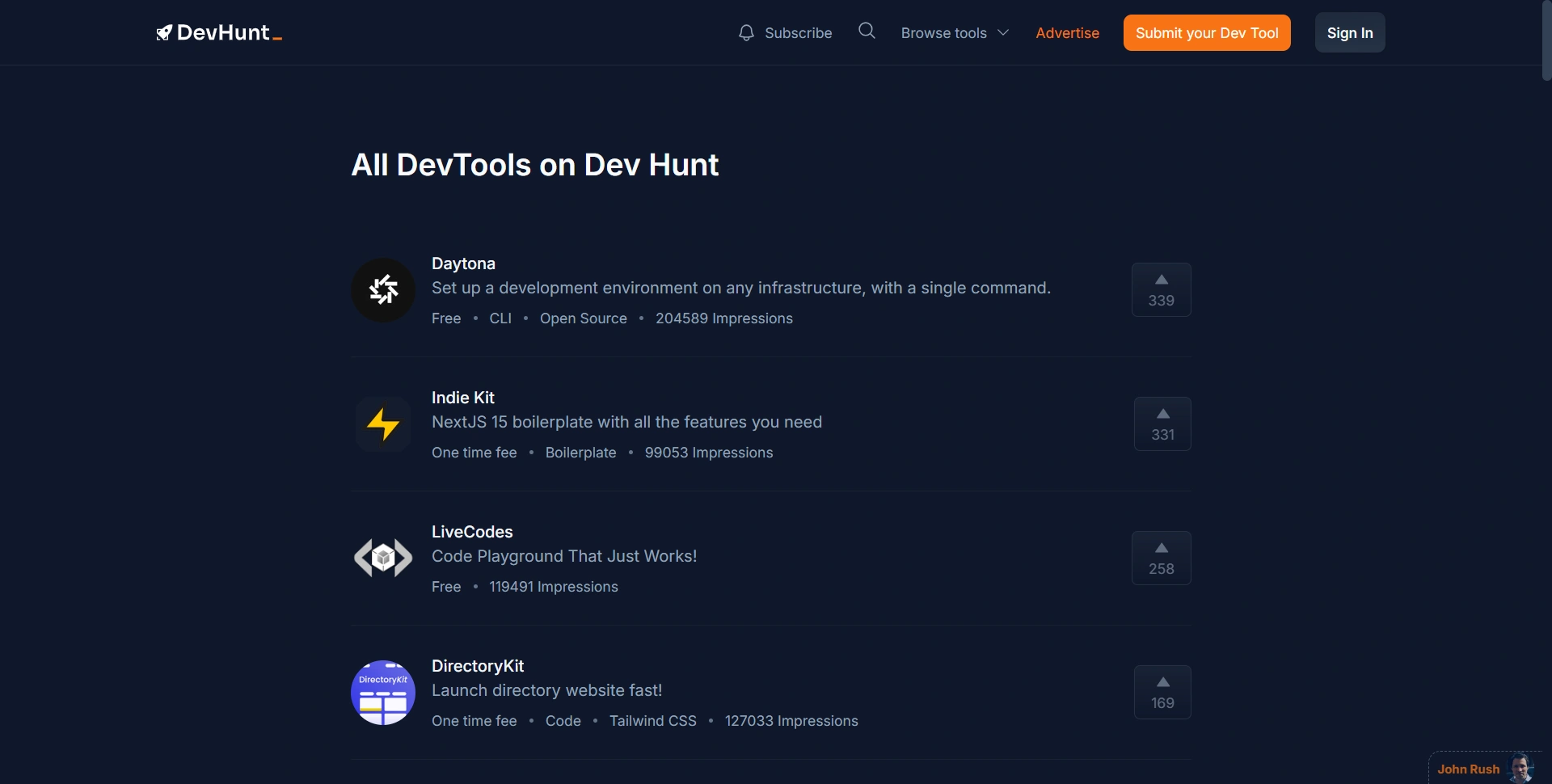
Products can be organized across categories including AI, Open Source, DevOps, Code, NoCode, Analytics, QA, API, DB, Design, Helpers, Hosting, and other technical areas.
This categorization makes it easier for developers to find tools relevant to a particular workflow or technical problem.
Product Launch Pages
Each product can have its own public launch page. These pages can contain the product description, categories, screenshots, comments, launch information, and engagement data.
A public product page can continue to provide a place for developers to discover the product after the initial launch period.
Community Voting
Developers can vote on products they find useful or interesting. Votes contribute to the community-driven ranking system.
For example, Pocketenv currently displays 73 upvotes and a #1 weekly ranking on its public launch page.
Comments and Feedback
Product pages include a comments area where users can discuss the product and provide feedback.
This is useful for early-stage founders because feedback from technical users can reveal usability problems, missing features, documentation issues, or positioning problems.
Weekly Rankings
DevHunt highlights weekly launches and rankings. Products can compete for visibility based on community engagement.
The platform's public launch pages show weekly positions alongside votes and impressions, giving founders additional signals about how their launch performed.
Weekly Email Newsletter
DevHunt offers a weekly email featuring selected new developer tools. The homepage explicitly promotes a weekly email for the best new developer tools.
This gives the platform another distribution mechanism beyond website discovery.
How Does Launching on DevHunt Work?
The basic process is straightforward.
Step 1: Prepare Your Developer Tool
Your product should be functional and ready for developers to evaluate.
Prepare a clear product description, screenshots, website link, and explanation of the problem your tool solves.
Step 2: Submit the Product
Submit your developer tool to DevHunt and provide the information required for its product listing.
The platform's open-source foundation also describes a collaborative approach to product listings and community voting.
Step 3: Choose Relevant Categories
Select categories that accurately describe the product.
For example, an AI coding tool might fit AI and Code, while an API infrastructure product could fit API, DevOps, or other relevant technical categories.
Accurate categorization matters because developers often browse products based on their specific interests.
Step 4: Engage With Developers
A launch should not end when the product page goes live.
Respond to comments, answer questions, acknowledge feedback, and explain how the product works.
A developer who takes time to provide feedback is giving you an opportunity to improve the product as well as build a relationship with a potential user.
Can DevHunt Help With Product Discovery?
Yes. Product discovery is one of its core purposes.
The platform's homepage states that more than 100,000 developers have found developer tools there, while individual launch pages provide product-specific discovery information.
The value of this discovery depends on audience-product fit.
A developer tool with a clear use case has a stronger reason to be discovered on DevHunt than a product aimed at a general consumer audience.
For founders, the main benefit is therefore not simply "more traffic." It is the opportunity to put a technical product in front of people who are more likely to understand its use case.
Does DevHunt Help With SEO and Backlinks?
A DevHunt product page can contribute to your broader online presence by creating another public page associated with your product and brand.
It can also generate referral traffic when developers discover the listing and visit the product website.
However, founders should not treat DevHunt as a guaranteed SEO shortcut.
The strongest reason to launch should be product discovery and developer exposure. Any backlink or search visibility benefit should be considered an additional benefit rather than the sole reason for submitting a product.
A broader SEO strategy should still include useful technical content, product documentation, relevant industry mentions, earned backlinks, and pages that directly answer the problems your target developers search for.
What Are the Pros and Cons of DevHunt?
Pros | Cons |
|---|---|
Developer-focused audience | Smaller and narrower ecosystem than broad launch platforms |
Free core launch experience | Not suitable for non-technical products |
Technical product categories | Launch visibility is not guaranteed |
Community voting and comments | Requires active promotion and engagement |
Weekly product rankings | Traffic can vary significantly between launches |
Individual product pages | Should not replace a complete marketing strategy |
Weekly developer-tool newsletter | Limited value if developers are not your target audience |
DevHunt vs Product Hunt
The main difference is audience focus.
Product Hunt is a broad product discovery and launch platform covering many types of software and technology products. DevHunt is specifically centered on developer tools.
DevHunt | Product Hunt |
Developer-tool focused | Broad product discovery |
Technical categories | Many product categories |
Developer audience | Broader technology audience |
Best for dev tools | Best for many types of digital products |
Developer-specific positioning | General startup and product positioning |
For a developer tool, using both can make sense. Product Hunt can provide broader exposure, while DevHunt can give the product an additional developer-specific discovery channel.
DevHunt vs Hacker News
Hacker News is primarily a technology news and discussion community, while DevHunt is structured specifically around developer-tool discovery and launches.
Hacker News can generate strong discussion when a technical product or story resonates with its community. DevHunt provides a more structured product page, category placement, voting system, and weekly launch ranking.
For founders, the two platforms can serve different purposes rather than being mutually exclusive.
Is DevHunt a Good Launch Platform for Developer Tools?
Yes, particularly if your product is genuinely built for developers.
Its focused audience, technical categories, community voting, launch pages, weekly rankings, and developer newsletter make it relevant for products such as AI developer tools, APIs, SDKs, open-source projects, DevOps platforms, coding tools, databases, and developer SaaS.
The biggest limitation is also its biggest strength: the audience is specialized.
If you are launching a developer product, that specialization can work in your favor. If your product has no meaningful developer audience, another launch platform may be a better fit.
How Can Founders Get Better Results From DevHunt?
The best approach is to treat DevHunt as one part of a multi-channel launch.
Before launching, make sure your product page clearly communicates:
What the product does
Who it is for
What problem it solves
Why developers should care
How they can try it
Where they can provide feedback
After launching, share the DevHunt page through relevant developer communities, your website, social profiles, newsletters, and existing user networks.
Do not rely only on votes. Track what happens after the launch. Look at referral traffic, signups, product usage, feedback, and conversations with developers.
A launch that produces fewer votes but brings highly relevant users can be more valuable than a launch with a high vote count and little product adoption.
Wrap-up
Dev Hunt Review 2026: DevHunt is a focused launch and discovery platform for developer tools, and its specialization is its biggest advantage.
It gives developer-tool founders, indie makers, open-source maintainers, and technical startups another way to reach developers who are actively interested in software tools. Its free core launch experience, technical categories, product pages, community voting, weekly rankings, and developer newsletter make it a practical addition to a developer-focused launch strategy.
It should not replace Product Hunt, Hacker News, GitHub, Reddit, SEO, or developer communities. Each channel reaches a different audience and serves a different purpose.
If you are launching a developer tool, using multiple relevant platforms can increase your chances of being discovered. Alongside DevHunt, you can also submit your product to NoonLaunch to expand your launch distribution beyond a developer-only audience.
A broader launch strategy can help you build brand awareness, reach additional early adopters, generate referral traffic, and create more opportunities for your product to be discovered online. A public listing on a relevant launch platform can also provide an additional backlink and strengthen your overall backlink profile as part of a wider SEO strategy.
The key is not to depend on one launch platform. Launch where your audience already spends time, give people a clear reason to try your product, collect feedback, and continue distributing the product after launch day.
For a developer-focused product, DevHunt is worth considering in 2026, especially as a complementary channel alongside broader product-launch and developer-community platforms.