Crunchbase Review 2026: Is It Worth Creating a Company Profile?
Crunchbase is a private-company intelligence platform and one of the best-known databases for startups, founders, investors, funding rounds, acquisitions, and private-market activity.
For startup founders, the most useful part of Crunchbase is often simpler than its paid research products: creating and maintaining an accurate company profile. Registered and socially authenticated users can create or edit profiles for free. A company profile can include your website, descriptions, industries, founders, headquarters, employees, funding rounds, investors, and other company information.
Our verdict: if you run a technology startup, SaaS company, AI product, developer tool, or venture-backed business, creating a Crunchbase profile is usually worth the effort. It can strengthen your third-party presence and make important company information easier for investors, prospects, journalists, and researchers to verify.
What Is Crunchbase?
Crunchbase is a private-market intelligence platform focused on companies, investors, funding activity, acquisitions, people, and market signals.
The platform says its dataset covers more than 4 million private companies and receives more than 30 million verified data updates annually. Crunchbase combines market-participant input, partner data, user engagement signals, automated ingestion, external sources, and analyst validation.
For founders, Crunchbase serves two main jobs: maintaining a public company presence and researching companies, investors, funding rounds, and market activity.
If you are still focused on launch distribution, NoonLaunch's guide to 19 startup launch platforms for new products is a better starting point.
How Do You Create a Crunchbase Company Profile?
Crunchbase allows registered and socially authenticated users to create new profile pages.
Before creating one, search Crunchbase to make sure your company does not already have a profile. If it exists, update the existing page instead of creating a duplicate.
If the company is not listed, use the Create Profile flow and select the appropriate profile type.
Crunchbase recommends completing fields such as your logo, founding date, website, social links, descriptions, headquarters, industries, founders, funding rounds, employees, board members, and advisors.
Completeness matters. Crunchbase recommends completing your profile to improve how the company appears in Crunchbase search results.
If you are building a wider listing footprint, use NoonLaunch's free Startup Launch Directories database to find other places to submit your product.
What Do You Actually Get From a Crunchbase Profile?
The first benefit is a structured third-party company page.
Instead of relying only on your own About page, Crunchbase can provide an independent location containing your company description, founders, industry, headquarters, website, social profiles, and other facts.
Second, funded companies can document funding rounds and investors. Crunchbase company profiles can show funding rounds, total funding, individual rounds, investor participation, and lead investors.
Fourth, Crunchbase can create credibility during research. Investors, journalists, potential partners, job candidates, prospects, and customers may use Crunchbase when they want to understand whether a company is real, funded, growing, or connected to particular investors.
Finally, the profile creates another structured source describing your company on the web.
Who Should Create a Crunchbase Profile?
Crunchbase is particularly useful for technology companies and businesses operating within the startup and investment ecosystem.
Venture-backed startups should maintain a profile because investors and funding rounds are central to Crunchbase's dataset.
Bootstrapped SaaS companies can also benefit, especially when they want a recognizable third-party company presence without outside funding.
AI startups, developer tools, fintech, B2B software, and marketplaces are also strong fits.
Founders planning to raise capital should pay particular attention to Crunchbase because investors use private-market databases to research companies, sectors, funding history, and other investors.
Crunchbase itself provides tools specifically for identifying investors by stage, industry, activity, and geography.
Crunchbase is less useful for businesses with little connection to technology or private-market research. The platform says it focuses on the tech ecosystem.
Is Crunchbase Free for Founders?
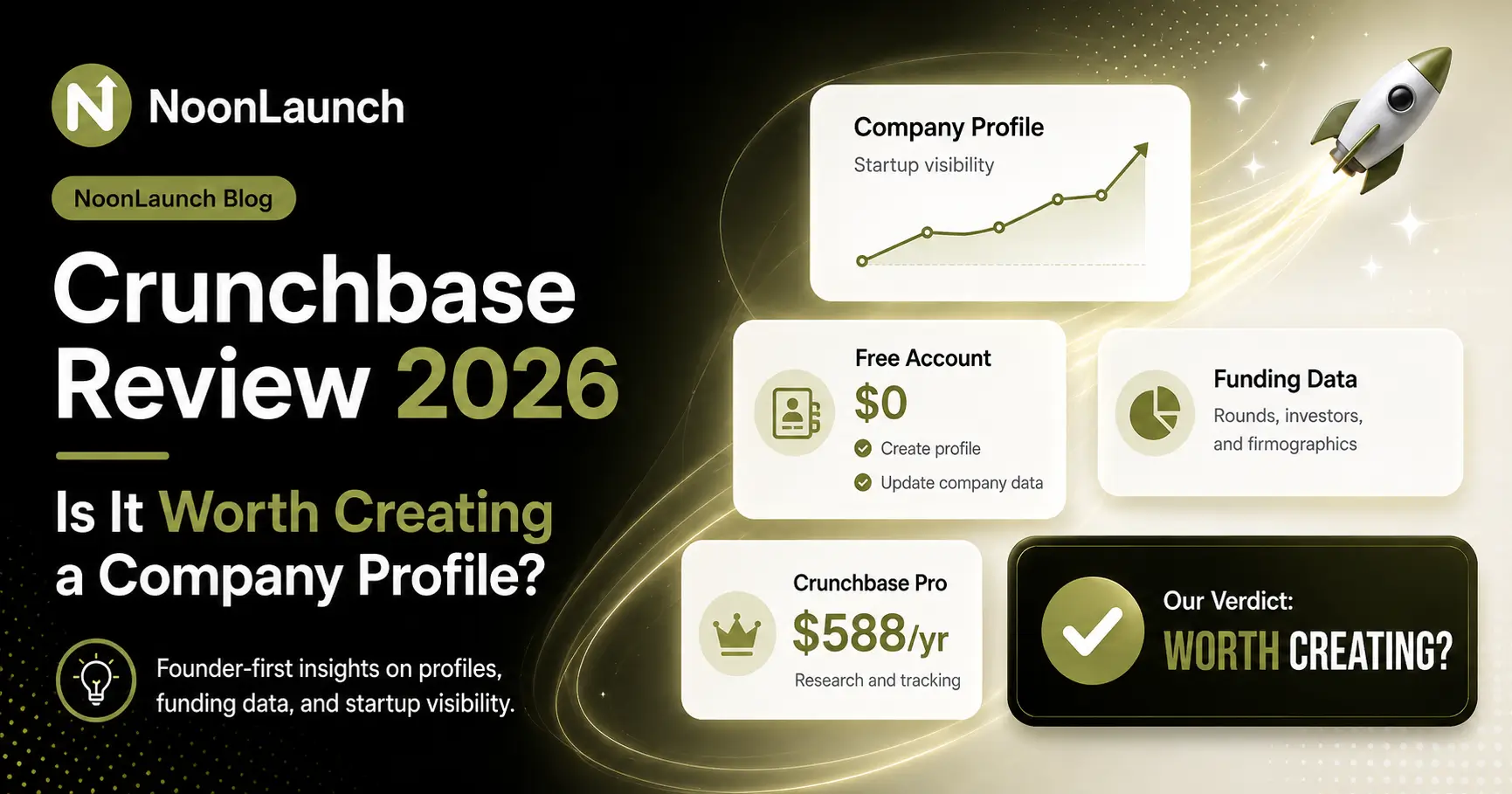
Yes. You can register for a free Crunchbase account and create or edit company profiles without purchasing Crunchbase Pro.
Crunchbase Free is designed for people who need basic company and firmographic information. Free accounts can create and edit profiles, but research capabilities are limited. Crunchbase's July 2026 comparison says Free users can see up to five results per search.
Crunchbase Pro is the paid individual research product. Crunchbase currently promotes a first-year annual introductory price of $588 and offers a seven-day free trial.
Pro expands search access, company intelligence, saved searches, alerts, AI-assisted research, tracking tools, and up to 2,000 rows of exports per month.
Crunchbase Business is built for teams and uses sales-based pricing. It adds deeper predictions, more exports, CRM integrations, and team features.
For founders who only want an accurate public company profile, the free account is enough.
For most early-stage founders, that means claiming the free profile first and treating paid intelligence as a research tool rather than a marketing requirement.
Is Crunchbase Pro Worth Paying For?
It depends on what job you need it to do.
Do not buy Crunchbase Pro because you think paying makes your company profile more credible. The profile can be created and maintained without a paid subscription.
Pro becomes useful when you actively research investors, companies, prospects, competitors, funding activity, or markets.
A founder raising a seed round could use Crunchbase to identify investors active in the company's sector and geography. A founder-led sales team could search for companies matching particular industries, funding stages, or growth signals. A strategy team might use funding and company data to map competitors.
Crunchbase Pro supports advanced searches across its private-company dataset, saved searches, alerts, exports, and AI-assisted company research.
If you are not doing those jobs regularly, maintain the free profile and spend the money elsewhere.
Is Crunchbase Good for SEO and AI Search Visibility?
Crunchbase can support branded search and online entity visibility, but it should not be treated as a simple backlink tactic.
A complete company profile gives search engines another structured page associating your brand with its website, founders, industry, location, funding, investors, and company description.
That third-party information can also be useful in AI-driven research because systems evaluating a startup may draw on multiple sources when identifying entities and verifying facts.
However, Crunchbase does not guarantee that creating a profile will improve Google rankings or cause AI systems to recommend your company.
The practical goal is consistency. Keep your company name, description, website, founders, categories, funding information, and other facts aligned across Crunchbase, your website, review platforms, directories, and launch pages.
Crunchbase Pros and Cons
Pros:
Free company profile creation and editing
Strong recognition in the startup and investor ecosystem
Company, founder, investor, and funding information
Useful third-party company presence
Valuable for fundraising and market research
Paid search and export tools for deeper research
Structured company data that can support brand verification
Cons:
Not a product launch platform
Does not generate launch-day community traffic
Free research results are limited
Crunchbase Pro is unnecessary for many founders
Some profile fields cannot be edited directly
A profile does not guarantee investors, traffic, rankings, or customers
Crunchbase vs Product Hunt vs NoonLaunch
Crunchbase, Product Hunt, and NoonLaunch solve different parts of the startup journey.
Crunchbase is primarily a company intelligence and private-market database. Use it to establish an accurate company profile and document founders, funding, investors, and company information.
Product Hunt is designed around product launches, maker discovery, votes, comments, and concentrated launch-day visibility.
NoonLaunch is also focused on product launch and ongoing discovery. Founders can launch for free, while the Premium Launch adds featured placement, permanent directory visibility, newsletter exposure, and a dofollow backlink.
Launch through relevant discovery platforms. Get users and build traction. Keep your startup information consistent across company databases such as Crunchbase. Then strengthen your presence with review sites, directories, customer proof, backlinks, and ongoing content.
Crunchbase Review 2026: Final Verdict
Crunchbase is worth using in 2026 for most technology startups, especially companies that expect investors, journalists, prospects, partners, employees, or researchers to investigate them.
The most important action is free: create or claim your company profile and keep it accurate.
Add your website, descriptions, industries, headquarters, founders, team members, funding rounds, and investors where relevant. Review the profile whenever something significant changes.
Crunchbase Pro is a separate decision. Pay for it when investor research, prospecting, competitive intelligence, company monitoring, or private-market data saves enough time or creates enough opportunities to justify the subscription.
Do not expect Crunchbase to replace product distribution. A company database tells people who your startup is. A launch platform helps put the product in front of people in the first place.
If you are still building that discovery layer, submit your product to NoonLaunch and add another permanent product page to your launch stack.